Common Mistakes When Hanging Curtains in Victorian Terraced Houses
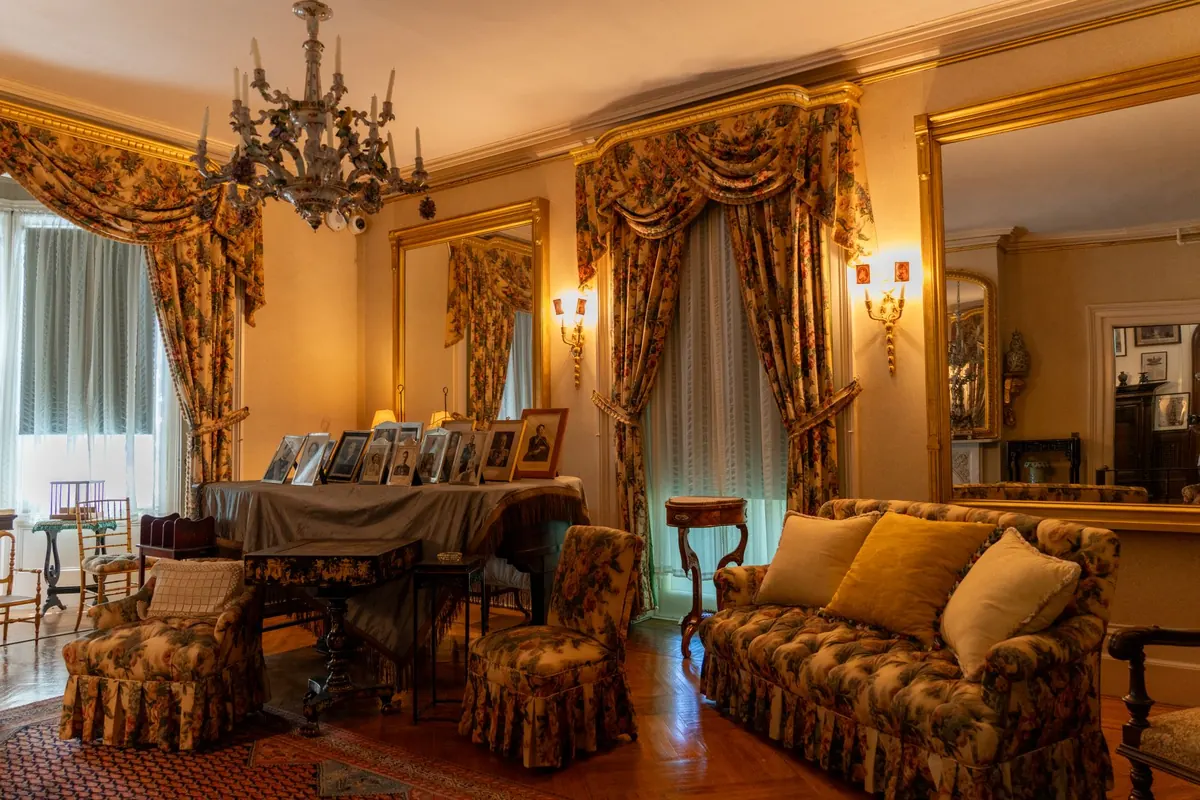
Victorian terraced houses come with generous proportions: ceilings that reach three metres or more, tall sash windows, deep skirtings and a picture rail quietly doing architectural work near the ceiling. It is all rather lovely, until you come to hang curtains. The advice you will find online is usually written with modern houses in mind, and following it in a Victorian room tends to make a handsome space look short and mean. Here is what commonly goes wrong, and how to get it right the first time.
Fitting the Rail Just Above the Window Frame
This is the mistake almost everyone makes. The window frame ends, so that is where the pole goes. In a Victorian room, the window head usually sits a good 50–70cm below the ceiling, which means a rail at frame level slices the wall into two awkward halves and chops the height of the room in two as well.
Where the rail should actually sit
Aim for the upper third of the gap between window head and ceiling, or simply a handspan below the cornice. In a room with a 3m ceiling that often means 25–30cm of bare wall above the window, sometimes more. This lifts the eye, makes the window feel taller than it is and gives the curtains room to hang in an unbroken line.
If you have a picture rail
Use it. Fitting the brackets a few centimetres below a picture rail is the single easiest way to get the proportion right, because the original builder already worked it out for you. On very tall walls, a ceiling-fixed track is the other clean option, and it keeps the wall above the window completely uninterrupted.
Leave the cornice alone
Victorian cornicing is run in plaster and it is brittle. Drill into it and you will lose a chunk of it. Set your brackets below, with a small gap so the fabric does not rub, and save yourself a repair.
Buying Curtains That Only Just Cover the Window
Curtains are wall covering, not window covering. When they are drawn back they should sit over the wall on either side, leaving the whole pane of glass clear. Two numbers matter, and neither of them is the window measurement.
- Fullness: the fabric should measure roughly twice the length of the pole or track for a decent gather, and two and a half times for a deep, generous pleat. Pencil pleat tape will usually state what it needs.
- Overhang: take the pole 15–25cm past the window opening at each end, and more in a wide bay. If the pole stops at the window edge, the open curtains will block the light and the arrangement will look skimpy.
Always order by the finished pole or track length, never by the width of the glass. It is a small change in how you measure and a big difference in how the finished room looks.
Getting the Drop Wrong
Half-mast curtains are the fastest way to make an expensive fabric look like a mistake. In a sitting room or main bedroom of a Victorian terrace, floor-length is almost always the right answer: it suits the tall proportions and it hides radiators, boxes and uneven skirting.
Measure from the hook, not the pole
The drop runs from where the curtain hook or ring sits to where you want the hem to finish, so the measurement changes depending on the header and the hardware. Work it out before you order, not after.
How far down should they go?
- Just kissing the floor – a 1cm clearance. Neat, easy to vacuum around, forgiving on uneven floors.
- A small break – 1–2cm resting on the carpet. Traditional and soft.
- Puddled – 3–5cm trailing. Dramatic, but it gathers dust and marks quickly on pale fabric.
- Sill length – useful in kitchens, bathrooms or above a radiator, where full-length curtains would trap heat and get grubby.
Take the drop measurement at three points across the window and work from the shortest. Victorian floors slope, and a hem that is level with the wall can still look wrong against the floorboards.
Forgetting How Sash Windows Work
Sash windows slide, and the top sash can travel downwards as well as the bottom sash travelling up. Anything screwed into the moving frame will either block it or be torn out of it. Brackets fitted tight to the frame can also stop a sash opening fully, which you will only discover on a warm day.
Many Victorian sash windows sit in a recessed reveal with a boxed frame and old internal shutters. Check whether the shutters still fold out and whether you want to keep them usable; if so, fix the pole to the wall face rather than inside the reveal. And avoid drilling into the sash box itself, where the cords and weights live. Wall above and beside the window is the safer ground.
Choosing Hardware That Doesn't Suit the Room
A slim 19mm pole that looks fine in a modern flat will look lost against Victorian skirting and cornice. A 28–35mm wooden pole, or a substantial metal one, holds its own. Beyond that:
- Bay windows need a bay pole or a bendable track. A straight pole across a bay leaves gaps at the corners, and the curtains will not meet the wall at either end.
- Eyelet curtains need clearance above the pole and run less freely than rings; they read as contemporary. Pinch pleat or triple pleat suits tall Victorian windows and stacks back tidily.
- On very high ceilings, a recessed or ceiling-fixed track is often neater than a pole with brackets, especially where the curtains are heavy.
Underestimating the Fixings
Victorian walls are usually lath and plaster over brick, sometimes patched, sometimes hollow. Long lined curtains are heavy, and a bracket pulled out of crumbling plaster is a job nobody wants. Find the joists or use fixings rated for the weight, drill slowly without hammer action, and tape over the spot first to stop the plaster blowing. For very heavy curtains, fix a timber batten into the joists and mount the track to that.
A Ten-Minute Check Before You Drill
- Mark the intended rail height at both ends of the wall and check it with a spirit level. Victorian walls are rarely plumb, so trust the level over the ceiling line.
- Work out the pole length: window width plus 40–50cm, or the full bay.
- Measure the drop at three points, from the hook position, and take the shortest.
- Test the sash travel, the shutter clearance, radiators, sockets and switches before committing to holes.
- Check the fullness of the fabric against the finished pole length. If it is under twice the width, size up.
Get those five things right and the curtains will look as though the room was built for them, which in a Victorian terrace it very nearly was.
Photo: Brett A / Pexels